Can You Fit Customised Kitchen Cabinets in a Period Property?
By Pacific Joinery Ltd
Start with what needs to fit
“Customised cabinets” can mean anything from changing a standard unit’s width to designing cabinetry around an uneven wall or an original feature. Those are different levels of work, so the useful question is not simply whether a cabinet can be altered. It is which parts of the room need a tailored solution, and what you want to preserve.
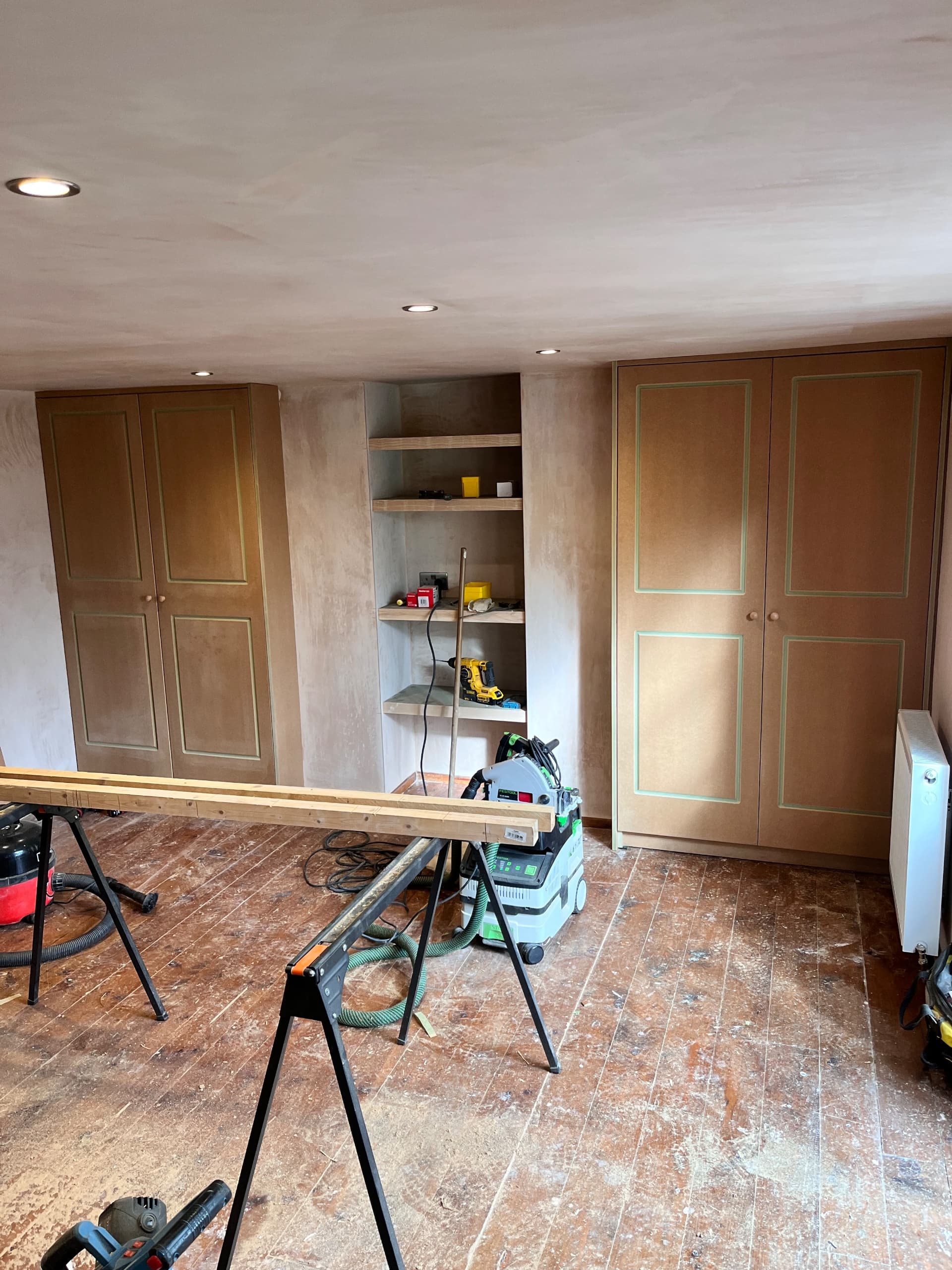
In Bristol period properties, you might find a kitchen where the walls are not square, the floor changes level, or a chimney breast, alcove or old doorway affects the available space. Before choosing cabinets, make a note of the features that cannot move and the parts of the layout you are willing to change. That gives you a clearer basis for comparing options.
Choose between standard, adapted and made-to-measure
Standard units
Standard cabinets can suit a room with enough regular wall space and a layout that works within the available unit sizes. They are usually the simplest choice when the room is fairly straightforward and you do not need cabinetry to meet an unusual angle or fit tightly around an architectural detail.
Check where any gaps would fall. A narrow leftover space at the end of a row of cabinets may be acceptable, or it may interfere with a doorway, appliance access or the way you use a worktop. Look at the whole run rather than judging each cabinet in isolation.
Adapted units
A standard layout can sometimes be adjusted with narrow panels used to close gaps or finish exposed sides. This may make sense when most of the room is regular but one edge needs a cleaner finish, or when a small variation in width would otherwise leave an awkward gap.
The important distinction is between concealing a gap and solving the underlying fit. A panel can finish an exposed side, but it does not automatically make an uneven wall straight or correct a floor that slopes beneath the cabinets. Ask what the adjustment will achieve and whether it affects access, door movement or the level of the finished worktop.
Made-to-measure cabinetry
Purpose-made cabinets may be worth considering when the room’s shape, a fixed feature or the desired storage cannot be handled neatly with standard sizes. They allow the dimensions and arrangement to respond to the room, but they need a clear brief. Decide what matters most: matching the proportions of existing joinery, gaining storage, keeping an original feature visible, or making the kitchen easier to use.
A bespoke solution is not automatically better in every room. If standard units meet your needs without compromising the layout, additional custom work may add complexity without solving a meaningful problem. The right choice is the least complicated one that gives you the fit and finish you want.
Make the decision from the room, not a catalogue
Before settling on a cabinet style, check the room at several points rather than relying on one measurement. Note where walls meet, whether corners appear square, where the floor changes level, and how doors, windows and appliances need to open. You can record visible constraints, but do not remove fittings or alter services to get measurements. If something is unclear, leave it for the relevant trade to assess.
Then rank your priorities. If preserving an old fireplace or keeping a particular doorway clear matters most, the cabinet layout should be tested against that first. If storage is the main concern, compare internal capacity and access, not just the outside appearance. If you want new cabinets to sit comfortably beside existing woodwork, take photographs and describe what you want to match. A visual reference is more useful than the word “period” on its own.
Ask for the proposed solution to be explained in practical terms: which units are standard, where anything is adapted, and what is being made specifically for the room. That makes it easier to understand the trade-offs before you commit to a layout. It also helps distinguish a deliberate design detail from a gap that has simply been left to deal with later.
Talk through your property and priorities
There is no single cabinet choice that suits every older home. The room’s shape, the features you want to retain and the way you use the kitchen all affect whether standard, adapted or made-to-measure units make most sense.
If you are planning a kitchen installation in Bristol, Kingswood or the surrounding area, bring those details to a conversation with us at Pacific Joinery Ltd. We can discuss what you want the finished room to do and what needs closer assessment. For an overview of the service, see our Kitchen Installation page.